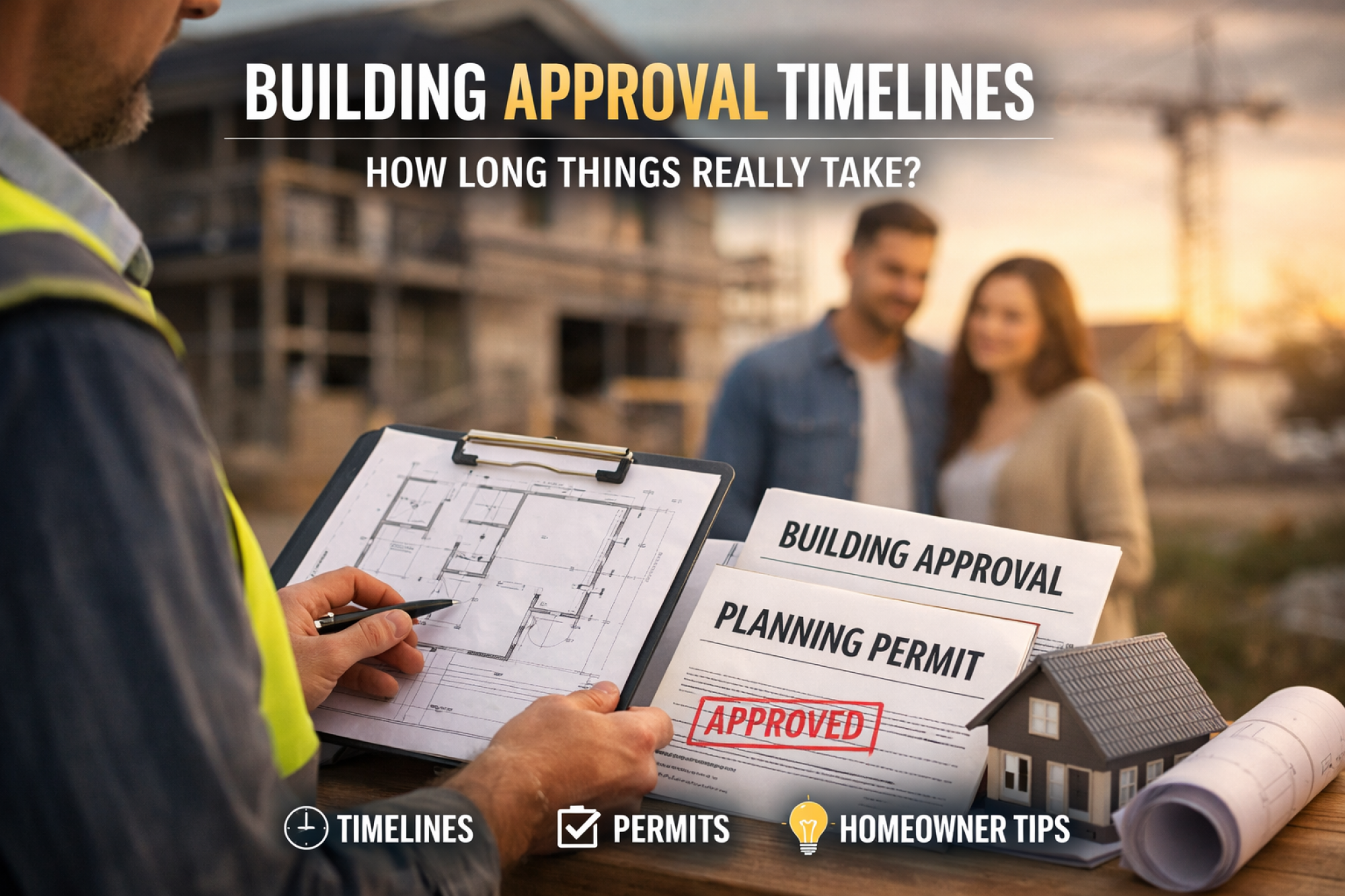
If you're planning to build a new home or take on a renovation, one of the first questions you’ll likely ask is:
“How long will it take before construction can actually begin?”
It’s an important question, and the truth is that many homeowners are surprised to learn that the approval stage often takes longer than expected. Before any work starts onsite, your project must go through several steps to ensure it meets council regulations and Australian building standards.
At Prescom Constructions, we guide homeowners through this process from start to finish, so you always know what to expect. Below is a realistic breakdown of building approval timelines and some helpful tips to keep things moving.
Building approvals exist for good reason. They help ensure your project is safe, compliant, and legally approved before construction begins.
The approval process confirms that your build:
Meets structural and safety standards
Follows national building codes
Aligns with local council planning requirements
Is properly documented for insurance and resale purposes
Although it can feel like a lot of paperwork, these steps protect your investment and help avoid costly issues later.
Approval timeframes vary depending on the type of build, your location, and how complex the design is. Here’s a general guide for homeowners.
This is where your project begins. During this stage, your builder and designer work on:
Initial consultations
Concept designs
Floorplans and layout adjustments
Budget alignment and planning
Homeowner Tip: Making key decisions early helps reduce delays later on.
Most projects require supporting documentation, such as:
Soil testing
Structural engineering
Bushfire or flood assessments
Stormwater and drainage reports
Some blocks require more reports than others, especially in higher-risk zones.
Not all builds require a planning permit, but many do—particularly if your project includes:
Extensions or major renovations
Multi-unit developments
Heritage or special zoning areas
Boundary variations
Planning permits are handled through your local council, and processing times can vary significantly depending on council workload and whether neighbour notifications are involved.
Once planning approval is complete (or if a planning permit isn't needed), the building permit is next.
This stage ensures the project meets building regulations, including:
Structural compliance
Energy efficiency standards
Safety and construction requirements
In some cases, private certifiers can approve permits faster than councils.
Before construction starts, final preparation takes place, including:
Signed contracts
Final material selections
Confirmed project schedules
Site preparation and access planning
Once everything is approved and documented, construction can officially begin.
As a general guide:
Small renovations may take around 4 to 8 weeks
Standard new home builds often require 3 to 5 months
Builds needing council planning approval can take 6 months or longer
Starting early is the best way to keep your timeline realistic and stress-free.
Delays can happen for several reasons, including:
Missing or incomplete documentation
Changes to the design after submission
Busy council approval periods
Complex site conditions
Neighbour objections during planning review
Zoning or overlay restrictions
Even small changes can restart certain approval steps, so clear planning upfront is essential.
There are several ways homeowners can help keep approvals on track.
Make decisions early
Finalising layouts, finishes, and designs early prevents unnecessary revisions.
Understand your block limitations
Site slope, easements, and zoning overlays can affect approval requirements.
Avoid last-minute changes
Design changes after documents are submitted often add weeks to the process.
Work with an experienced builder
A builder familiar with council requirements can manage paperwork correctly and avoid common mistakes.
Stay informed with regular updates
Clear communication throughout the process helps you stay confident and prepared.
At Prescom Constructions, we do more than build homes. We manage the full journey, including approvals, planning, and coordination with consultants and certifiers.
Our team supports you through:
The approval and permit process
Consultant and council communication
Clear project timelines
Reduced delays through smart preparation
We’re here to make the experience straightforward and stress-free from day one.
Building approvals take time, but with the right planning and the right team, the process can be smooth and predictable.
Contact Prescom Constructions today to discuss your project and receive expert guidance on realistic timelines and next steps.
Prime Costs (PC) and Provisional Sums (PS) are essential terms in construction quotes. Prime Costs cover allowances for materials like fixtures or appliances that haven't been selected yet, offering flexibility but potentially leading to additional costs if more expensive options are chosen. Provisional Sums are estimates for work not fully defined when quoting, like excavation or retaining walls, and may change due to unforeseen circumstances. Understanding the distinction helps homeowners manage budgets and avoid surprises during the building process.
Read more
A pre-handover inspection is crucial when taking possession of a new home to ensure any issues or defects are addressed before the final settlement. Key areas to check include the structural integrity (e.g., walls, floors), fittings and fixtures (e.g., taps, doors, windows), kitchen appliances, bathroom tiles and plumbing, electrical systems, and finishes like paintwork and flooring. By thoroughly inspecting these aspects, homeowners can prevent costly repairs later and ensure a smooth transition into their new home.
Read more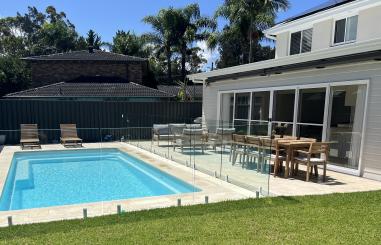
In recent years, a new trend has emerged in the world of residential homes known as the Australian Hamptons style. This unique architectural and interior design style combines elements of traditional Hamptons style with a distinctive Australian twist, resulting in homes that are both elegant and relaxed. Often referred to as Aussie Hamptons, these homes have gained popularity for their timeless appeal and seamless integration with the beachy Australian lifestyle.
Read more